Ink reference
Each entry answers one practical question about pen ink, with the short answer first and a comparison table where it helps.
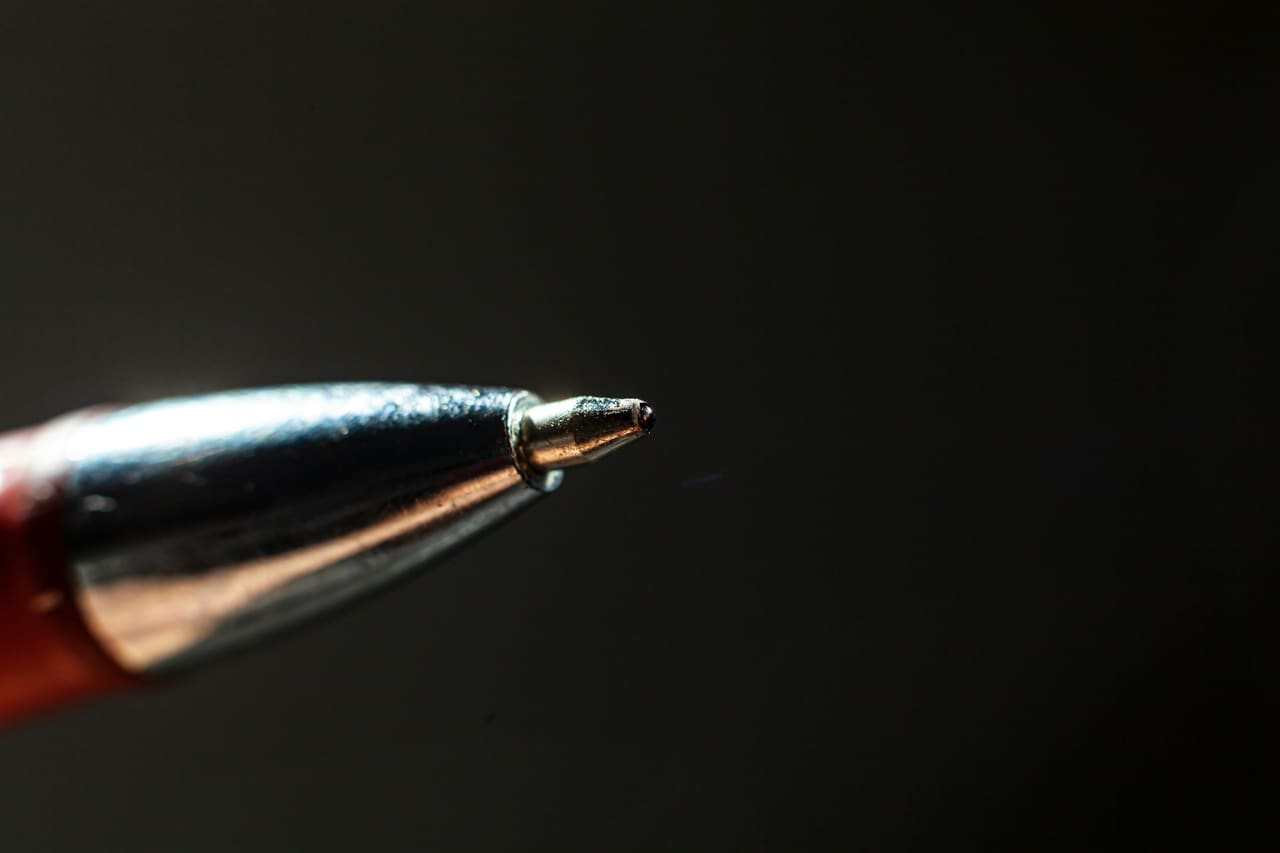
- Ballpoint vs gel vs rollerball inkAll four use a tiny rotating ball at the tip. The difference is the ink. Ballpoint uses thick oil-based paste that dries fast and lasts long; gel uses water-based ink thickened with a gelling agent for a smooth, vivid line; rollerball uses thin liquid ink that glides but bleeds on cheap paper. Hybrid ballpoints sit between ballpoint and gel.
- Writing left-handed without smudgesLeft-handed writers push the pen and their hand travels over freshly written ink. Choose a fast-drying ink (oil-based or hybrid ballpoint, or a gel sold as quick-drying), use less absorbent paper with care, and tilt the page clockwise so your hand stays below the line you are writing.
- Permanent ink for documents and signaturesFor important documents, use ink that resists water, light, and tampering. Pigment-based gel inks and pens marked as meeting a documentary-use standard, such as ISO 12757-2 for ballpoints, are designed for this. Avoid erasable pens and dye-based rollerballs for anything that must last.
Quick glossary
- Viscosity
- How thick an ink is. High-viscosity ink (ballpoint) needs pressure; low-viscosity ink (rollerball) flows freely.
- Shear-thinning
- Gel ink becomes thinner while the ball is rolling and thickens again on the page.
- Feathering
- Ink spreading along paper fibres, making a fuzzy line.
- Bleed-through
- Ink soaking through to the other side of the page.
- Pigment and dye
- Solid colour particles versus dissolved colourant. Pigment usually resists water and fading better.